
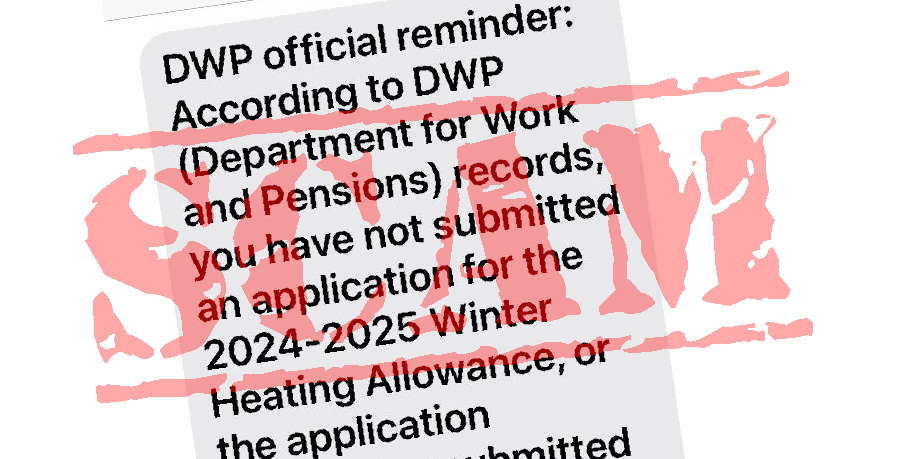
Beware Phishing Texts from DWP about Winter Heating Allowance Applications
UK citizens should be on the look out malicious text messages that appear to come from the UK’s Department of Work and Pensions (DWP) that claim their winter heating allowance application was not submitted, or was submitted incorrectly.
In the UK, eligible residents can qualify for a winter fuel payment to help with rising heating costs. However, with this latest scam, those that qualify are being targeted by phishing scams designed to lure recipients to spoof government websites that steal any data entered into them. Examples of the text messages are below.
Department for Work and Pensions official reminder:
According to DWP records:You have not yet submitted your application for Winter Heating Allowance 2025-2026. To ensure you receive your £300 payment, please complete your application before 26 July 2025.
Failure to submit an application by the deadline will render you ineligible for the stipend.
Please take action now and complete your application via the link below:
LINK REMOVED
(Please reply Y, then exit the text message and open it again to activate the link, or copy the link to your Safari browser and open it)
DWP official reminder: According to the DWP (Department for Work and Pensions) records, you have not submitted an application for the 2024-2025 Winter Heating Allowance, or the application information submitted previously is incorrect. To ensure that you can receive £300 allowance, please complete the application before July 29, 2025. If you fail to submit an application before the deadline, you will lose your eligibility for this.
Scammers appear to be sending these phishing text messages blindly, knowing that they will likely end up in the inboxes of many recipients who really have applied for this government scheme. In those cases, such scam texts could appear convincing, and may lead to recipients clicking the link in the messages, which will direct them to malicious websites.
Sponsored Content. Continued below…
In the examples of this scam we have seen, the malicious website appears to look like the genuine UK Government website, and asks for a visitor’s personal contact information along with their credit and debit card information which the site claims is to receive fuel payments. However this information is sent to the scammers who will use it to commit identity theft and potentially gain unauthorized access to the victim’s online bank accounts.
As usual, potential victims can spot that the links are not leading to the actual GOV.UK website by looking at the web domain. For more information on spotting fake domains, refer to our tutorial guide here and learn more about the tricks that scammers use to try and mask spoof domains.
You can forward spoof text messages in the UK to 7726.
Continued below...
Thanks for reading, we hope this article helped, but before you leave us for greener pastures, please help us out.
We're hoping to be totally ad-free by 2025 - after all, no one likes online adverts, and all they do is get in the way and slow everything down. But of course we still have fees and costs to pay, so please, please consider becoming a Facebook supporter! It costs only 0.99p (~$1.30) a month (you can stop at any time) and ensures we can still keep posting Cybersecurity themed content to help keep our communities safe and scam-free. You can subscribe here
Remember, we're active on social media - so follow us on Facebook, Bluesky, Instagram and X